
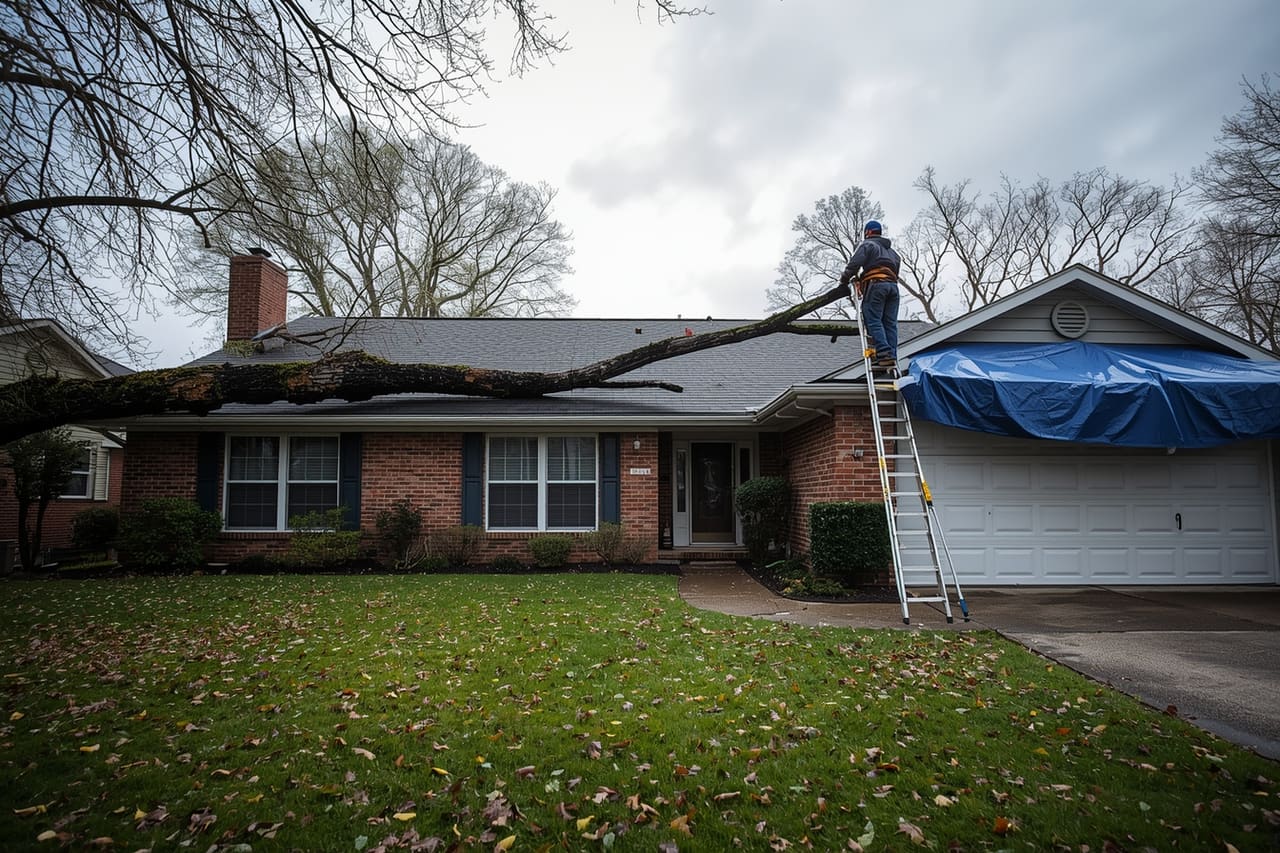
Afternoon thunderstorms are routine here from late spring through summer, and hurricane season runs from June to November. Wind drives rain sideways through window frames, stucco cracks and soffit vents. Limbs from live oaks and pines come down on roofs. Tropical systems, including Tropical Storm Debby in August 2024, bring heavy rain and flooding that reach inside houses that were never wet before. Storm damage is usually a mix of roof or envelope damage that lets water in, water that is already inside and sometimes rising water from outside.
Right after the storm
- Check for danger first. Downed power lines, gas smells, a sagging ceiling that holds water and damaged chimneys or limbs hanging on the roof are reasons to stay out and call the proper utility or emergency number.
- Keep clear of standing water if power may be on. If water touched outlets or the panel, an electrician needs to look before power returns.
- Take photos and video before moving anything, showing both the damage and its cause: the fallen limb, the missing shingles, the broken window.
- Limit further damage. Insurers expect you to take reasonable steps: tarp the roof opening, board a window, move belongings, put out buckets. Keep receipts.
- Do not climb a wet or damaged roof. A roofer or restoration crew can place a temporary cover.
- Call your insurer and report the loss promptly. Ask your agent what is required, what the deductible is for wind and hurricane damage, and whether a separate flood policy applies.
Temporary protection
Emergency protection often comes before any restoration work. A roofing tarp covers a hole, plywood closes a broken window or door, and plastic sheeting holds back rain while a permanent repair is arranged. These steps reduce the water that gets in tomorrow, and insurers generally want them done. Ask for a written note of what was done and photos.
Drying what got wet
Once water is stopped from entering, the drying process is the same as for any water loss: remove standing water, pull wet insulation and soaked drywall, and set air movers and dehumidifiers. The details are in water damage restoration. A few storm-specific points:
- Attic and ceiling water. Roof leaks soak attic insulation, run down walls and sit above ceilings that bulge and sag. A bulging ceiling can release a lot of water at once. Keep everyone out from under it, shut off power to that area at the breaker only if you can reach the panel without standing in water, put a bucket under the drip and call. Do not push on it or open it yourself.
- Wind-driven rain on walls. Water forced behind stucco, siding and windows can wet wall cavities that show no stain for weeks. Moisture readings find it.
- Window and door leaks. Salt air breaks down caulk and seals over time, so storms often reveal leaks that were already starting.
- Post-storm humidity. The air after a storm is saturated. Dehumidifiers matter more than fans, and opening windows is counterproductive until it dries out.
The EPA advises drying wet materials within 24 to 48 hours to prevent mold growth. After a widespread storm, crews are busy, so doing what you can yourself, such as removing soaked rugs and pad and running a dehumidifier, buys time.
Rising water after a storm
If water came from outside, through doors, up from the floor or through the crawl space, it is flood damage with its own rules and contamination concerns. See flood damage restoration. If sewage backed up or a septic system overflowed, see sewage cleanup. Standard homeowners policies generally exclude flood; check your policy or ask your agent.
Mold after storms
Mold can show up within days in a house that stayed wet, especially in a closed-up summer house. Check ceilings, closets, the underside of windows, baseboards and inside cabinets for stains or a musty smell. If you find growth, see mold removal. Homes left closed during an evacuation, with the power out and no AC, are especially at risk; the guide on closed-up homes and rentals covers what to check.
Documentation for insurers
Insurers decide claims with evidence. Good records include:
- Photos and video of damage, before and after cleanup
- A list of damaged items with approximate age and value
- Dates and times: when the storm hit, when you saw the damage, when work started
- Written scopes and invoices for emergency work
- Moisture readings and drying logs from the restoration crew
Keep damaged materials until the adjuster has inspected them or you have written permission to discard them. Ask your insurer in writing what they need. The restoration company's job is to document the work and the conditions; the insurer decides what is covered.
Before the next storm
Preparation does not have to be elaborate:
- Photograph each room and the outside of the house now, along with serial numbers on major items.
- Trim limbs that hang over the roof, and clean gutters and downspouts.
- Know where the water and electrical shutoffs are.
- Check caulk and seals on windows and doors, especially on the side that faces weather.
- If you leave for an evacuation, raise valuables off the floor, and think about a plan for the AC and humidity in the house while you are gone.
- Review your flood and homeowners coverage before the season. Flood policies generally have a waiting period before they take effect.
- Keep a short list of numbers: your insurer, your agent and your electrician.
NOAA and the National Weather Service publish hurricane readiness guides at weather.gov and noaa.gov, and Chatham and Beaufort counties post evacuation zone information.
Who to hire after a storm
After a big storm, demand rises and out-of-area crews arrive. Slow down. Ask for a written scope, proof of liability insurance and references, and be wary of anyone asking for most of the money up front. Roof and rebuild work generally requires a state-issued contractor license, so ask for the license number and check it with the Georgia State Licensing Board for Residential and General Contractors or the South Carolina Department of Labor, Licensing and Regulation. Neither state licenses mold work today, so for mold ask for verifiable industry training credentials and a written scope.
Where to go next
For the drying itself, see water damage restoration. For rebuilding, see repairs after water damage. For wet belongings, see contents pack-out. If the house is on a crawl space that took water, see crawl space mold removal.