
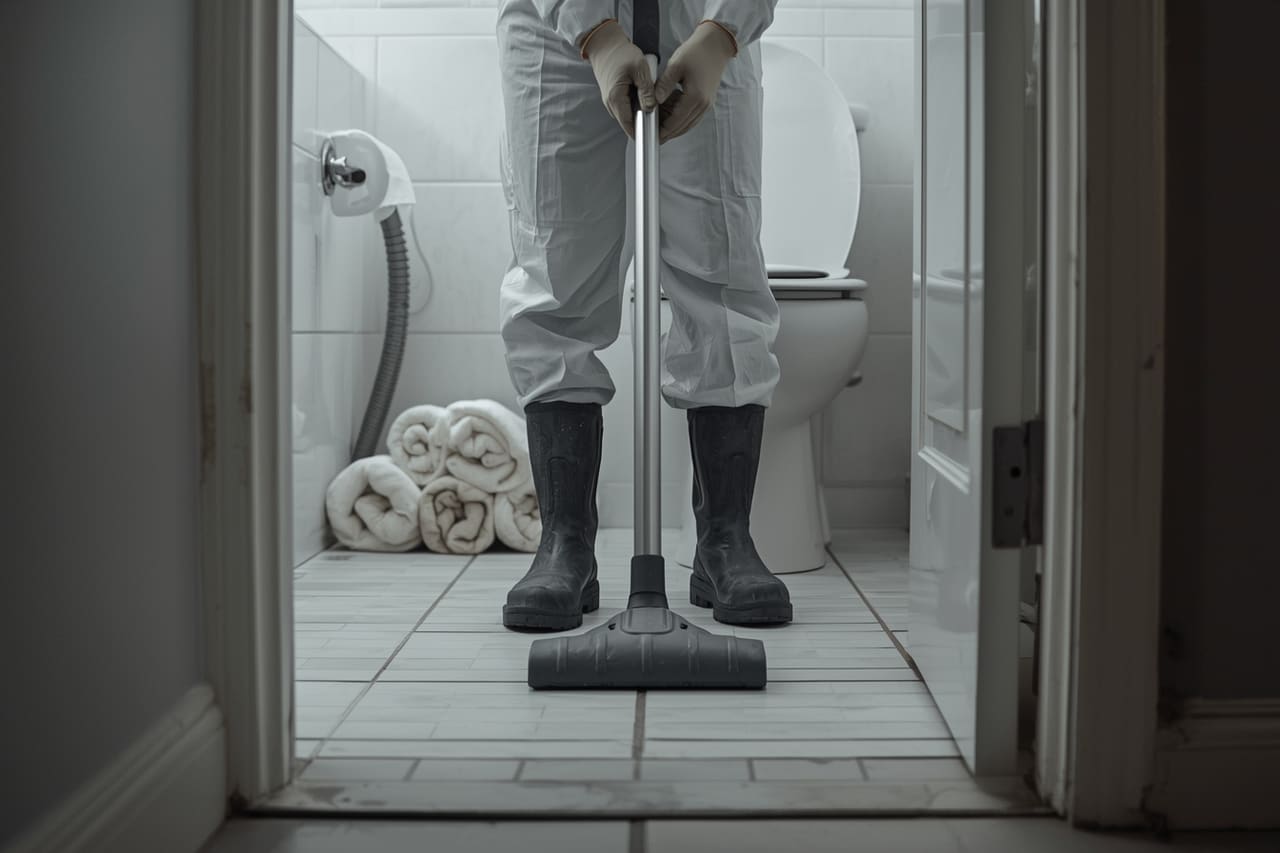
A sewage backup is the water damage category nobody wants to handle on their own. The water carries bacteria, viruses and parasites, and the smell stays in porous materials long after the water is gone. In the Lowcountry, backups come from a few typical sources: heavy rain that overloads municipal sewer lines in low neighborhoods, a clog in a line from the house, tree roots in older clay lines in established areas, a failed lift or pump station on a property, and septic systems that flood or fail, which is common on the islands, in rural areas and on older lots outside city sewer service.
Safety and first steps
- Stay out of the affected area and keep children and pets away. Health questions go to a doctor, and anyone with a weakened immune system should be especially careful.
- Stop using water. Do not flush toilets, run the dishwasher or washing machine or use sinks, since that sends more into the backup.
- Shut off power to the affected area if it is safe and dry to reach the panel. Do not step into sewage to do it.
- Wear protective gear if you must go in: rubber boots, gloves, eye protection and a respirator rated for particulates. Wash hands thoroughly afterward.
- Photograph everything before cleanup.
- Call a plumber to clear the line and find the cause, and call your insurer. If it was a municipal main backing up, tell the utility and ask what they need from you.
What gets removed
Sewage-contaminated water is called black water. Porous materials that it touches generally cannot be made safe and are removed.
- Carpet, pad and rugs
- Drywall and insulation that were wet, usually well above the waterline
- Particleboard cabinets and furniture
- Mattresses and upholstered items
- Wet cardboard, books and paper
Hard, nonporous items such as tile, metal, solid wood framing and plastic can be cleaned and disinfected. Framing and subfloor are usually cleaned, disinfected and dried instead of replaced, unless they are damaged. Concrete is cleaned with disinfectant and may need sealing if odor persists.
How the cleanup is done
1. Contain and protect. Crews often seal off the area with plastic so contamination does not spread through the house, and shut down the HVAC system while work is under way.
2. Remove the water and the materials. Standing sewage is pumped and extracted, and contaminated materials are bagged and disposed of properly.
3. Clean. Surfaces are washed to remove soil, then disinfected with an appropriate product used as directed. Cleaning comes first, because disinfectant does not work on dirt.
4. Dry. Dehumidifiers and air movers dry the structure, as described in water damage restoration. Contaminated areas dry under controlled conditions so moisture and air from the affected zone do not travel into clean rooms.
5. Deodorize. Odor control usually follows removal and cleaning, not the other way around. Masking odor without cleaning is a sign the job is being skipped.
6. Verify and rebuild. Surfaces are checked visually and moisture readings are taken. Then repairs after water damage begin.
Septic systems on the islands and rural lots
Homes on septic tanks face a few additional concerns. High water tables and heavy rain can saturate a drain field so it cannot take water, and flooding or high tides can push water into a tank. Signs of trouble include slow drains throughout the house, gurgling, sewage smell in the yard, soggy ground or standing water over the drain field and backup in the lowest fixture. A septic contractor, not a restoration crew, handles the tank and field, and county or state health agencies may have rules about repairs. For South Carolina, the Department of Environmental Services at des.sc.gov is a starting point for septic rules; Georgia and county environmental health offices cover the Georgia side.
A restoration crew then handles the interior contamination once the source is controlled. If a house has had floodwater plus septic overflow, flood damage restoration also applies.
Backups in low-lying neighborhoods
Flat, low areas near the marsh and tidal creeks can see sewer lines overload during heavy rain or high tides. A backup that comes up through the lowest drain, usually a floor drain, shower or basement-level fixture, is a sign the main is overloaded. Ask the city or county utility about a backwater valve, and ask a plumber whether one is a fit for your house. It is a plumbing decision, and a permit may apply.
Mold after sewage
Sewage-wet materials are also wet materials, so mold can follow. If drying was slow or something stayed damp, see mold removal and mold inspection. The odor of sewage is not the same as mold, though both can be present.
Insurance
Coverage for sewer and drain backup is often a separate endorsement on a homeowners policy. Many standard policies exclude it or cap it at a low amount. Floods are generally excluded and fall under a separate flood policy. Read your policy or ask your agent before work starts, document the damage and keep receipts. Do not throw out damaged items until the adjuster says you can, unless they pose a hazard, and photograph them if you must.
What to ask a crew
- Do you follow written procedures for contaminated water, and can I see the scope?
- What protective gear and containment will you use?
- What comes out and what is cleaned, and why?
- How will I know the area is clean before rebuild begins?
- For rebuild work, what is your state contractor license number? Georgia and South Carolina license contractors, and the Georgia State Licensing Board for Residential and General Contractors and the South Carolina Department of Labor, Licensing and Regulation let you check.
- Do you carry liability insurance, and can you show proof?
Neither state licenses mold or sewage restoration work as such, so ask for industry training credentials you can verify and a written contract.
Where to go next
If water from outside was involved, see flood damage restoration. For the full drying process, see water damage restoration. For belongings, contents pack-out covers what can be cleaned off-site.