
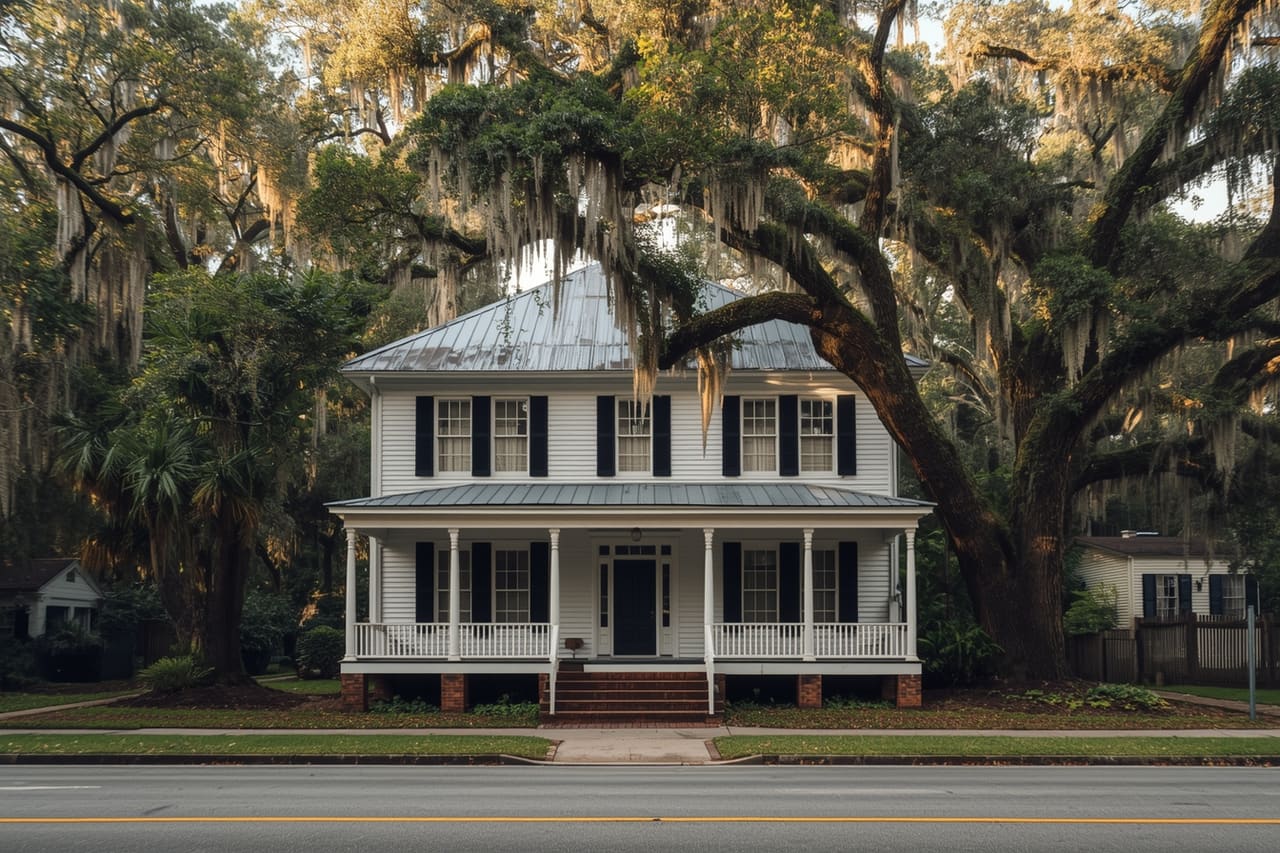
Beaufort sits on Port Royal Island, ringed by rivers, marsh and tidal creeks. The historic district, including the neighborhood known as the Point, holds wood-frame houses with deep porches, tall windows, high ceilings and raised foundations from the 1800s. Beyond the old streets, Lady's Island and the creek-side roads have newer homes, rural houses and a fair number of docks and boathouses. The base at Parris Island and the air station nearby also shape housing here.
Houses built to breathe
Older Beaufort houses were designed for heat. Tall ceilings, cross-ventilation, shutters and porches kept them livable before air conditioning. Adding AC changes the physics: cool air indoors meets humid air leaking in through gaps and old siding, and that creates condensation inside walls and on the cold surfaces. A house that was fine for 150 years may start to show mildew in a closet after a system is installed, or after the windows are sealed more tightly.
If you are working on an old house here, do it slowly, and think about drying and ventilation before you seal. The regional guide on mold in historic Savannah homes applies equally to Beaufort's older stock, and covers plaster, old masonry, lead paint and asbestos concerns in pre-1978 houses.
Piers, floors and the space beneath
Most older houses stand on brick piers with air beneath. Heart pine floors and large timbers are durable if kept dry and costly to replace. When moisture settles in the crawl space, mold shows up on the underside of the floor and on insulation long before the room above looks wrong. Dry old floors gradually. Forcing heat on a wet heart pine floor can cup or crack boards, so a crew should monitor moisture and adjust. See repairs after water damage for how rebuild choices work with old materials.
Historic review and visible repairs
Before replacing windows, siding or other visible exterior parts of a house in the historic district, check with the city's historic preservation office. Rules may apply to materials and appearance, and a repair after water damage that looks identical to a new owner may need approval. Interior drying and removal normally come first, and exterior changes come after you know what the city requires.
Tides, creeks and storm flooding
The town sits close to the water, and some streets near the bay and creeks see flooding during king tides and tropical storms. Lady's Island and the roads that wind along marsh edges can flood from a tidal surge as well as heavy rain. This water is salty and dirty. Photograph, then pump, then dry and clean. Read flood damage restoration. Flood insurance is separate from your homeowners policy, so ask your agent what you have well before a storm.
Military housing and renters
Many people in the area rent, including service members and families on assignment. If you rent, tell your landlord or property manager about moisture and mold problems in writing, keep copies and photos, and ask a tenant advocate or attorney about your options. On-base housing has its own maintenance channels.
Choosing a crew
- Written scope, room by room, and a written contract.
- Proof of liability insurance.
- Verifiable industry training; neither South Carolina nor Georgia licenses mold work today.
- A state license number for rebuild work.
- A plan to preserve original wood and trim wherever it can be dried and saved.
Nearby
Port Royal is a few minutes away on the same island and has smaller, lower lots. For a busier, newer market to the south, see Bluffton.