
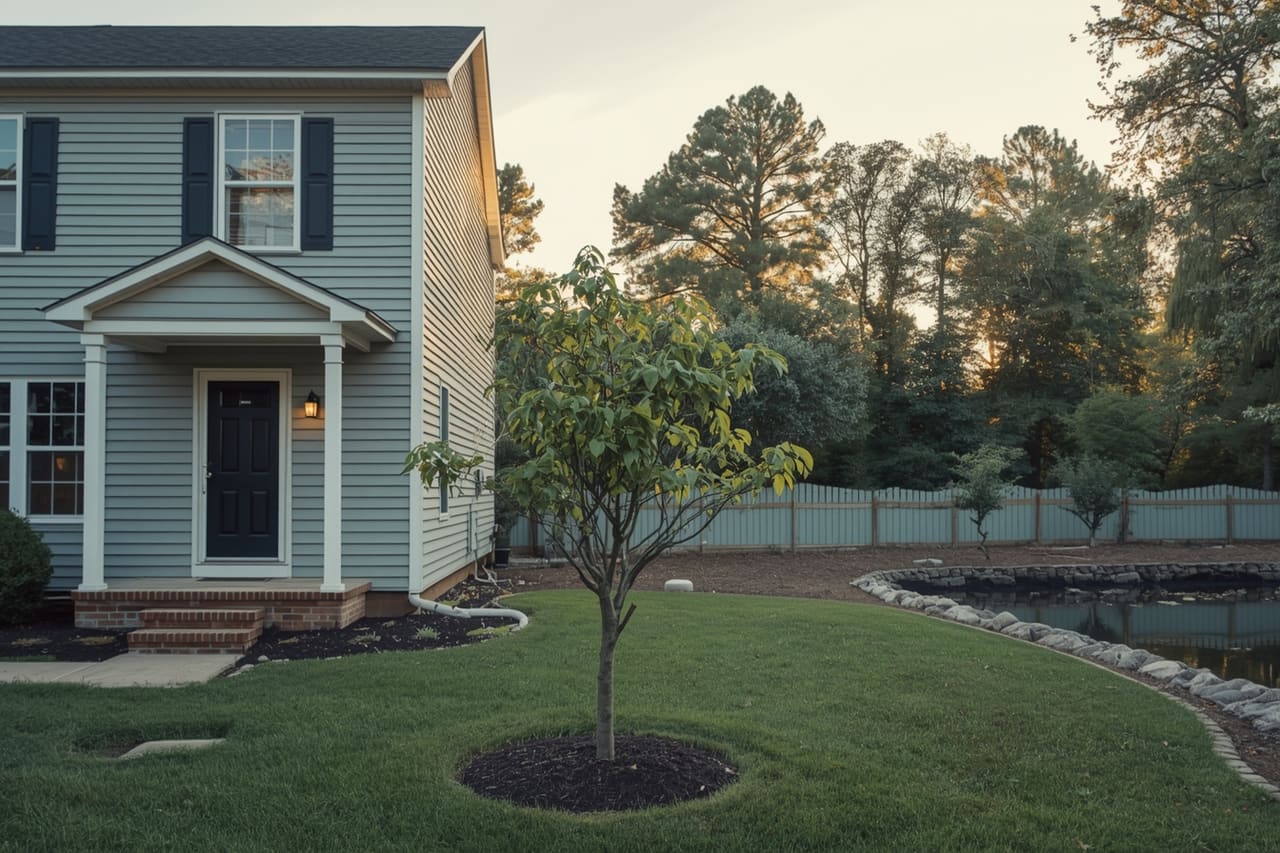
Pooler sits west of Savannah along I-95, close to the airport, and a large share of its housing has gone up in the last couple of decades. Subdivisions of two-story vinyl and brick houses, townhomes and apartment complexes fill the land between the interstate and the older core of town. That age matters. A house built recently is tight, well insulated and full of drywall, and it relies on its air conditioning to keep the inside dry through a long humid summer. When something interrupts that system, the house has less margin than an older, leakier one.
Slab houses and what a slab leak looks like
Many newer Pooler homes sit on a concrete slab. Water lines and sometimes drain lines run through or under that slab, and a pinhole leak there is hard to see. The signs are quiet ones: a water bill that climbs for no reason, a warm spot on a tile or laminate floor, the sound of running water when every fixture is off, baseboards that swell, or a musty smell in one room that never clears. By the time water reaches the surface it has usually soaked the subfloor edges and the bottom of the drywall.
A leak detection specialist or plumber finds the source. Drying the house is a separate job, and it should start once the leak is located and stopped. See burst pipe and leak water damage for how the drying steps go.
Attic air handlers and the drip that nobody sees
In a two-story house the air handler often lives in the attic. In July the coil sweats heavily, and the condensate drain line carries that water away. Builders sometimes run that line with little slope, and algae and dust clog it within a few seasons. When it backs up, the secondary pan overflows, and water drips onto the ceiling below. A brown stain on a bedroom or hallway ceiling, a soft patch of drywall or a drip near a closet are the usual first signs.
Check the drain line each spring, and know where the float switch or emergency shutoff is. If the ceiling is already stained or sagging, keep out from under it and call. A stained or sagging ceiling usually means insulation above it is wet too, and wet insulation holds water against the framing for weeks.
Retention ponds, grading and heavy rain
Pooler's flat ground drains through ditches and retention ponds. Most of the time that works. During a stalled tropical system or a series of afternoon downpours, ponds fill, ditches back up and the water finds low spots: garages, ground-floor entries, the crawl space on the few raised houses. Ask whether your lot has a drainage easement behind it and keep the swale clear of leaves and mulch.
Flooding of this kind is not the same as a plumbing leak, and the water is dirtier. Photograph the water line before moving anything, and read flood damage restoration for the order of work. Homeowners policies often exclude flood, so check your policy or ask your agent early.
Townhomes and shared walls
Townhomes and condos around Pooler share walls, floors and sometimes water lines. A leak in the unit above can soak your ceiling long before the neighbor notices. Document the damage, tell your association or landlord in writing and ask who is responsible for the drying. Questions about who pays belong with an attorney or the association, not a contractor.
Mold in a house that is only a few years old
Mold in a young house surprises people. The usual causes here are a construction-era moisture issue, a sweating duct, a poorly vented bathroom, windows that leak at the flashing, or a closet where the AC never circulates. Because the finishes are new, damage often hides behind a vanity or in a wall cavity before it shows. If you can see it, a small patch on a hard surface is a cleaning job. If it is behind drywall, or the smell has no visible source, mold inspection can find where the moisture is entering.
What to ask a contractor
- A written scope that names each room and what will be removed or dried.
- Proof of liability insurance, and the contractor's state license number for any rebuild work, since Georgia regulates repair contractors even though it does not regulate mold work.
- Whether the crew will take moisture readings every day and share them with you.
- For larger jobs, a clearance check from someone who did not do the removal.
Nearby
Neighbors toward the coast should read about Garden City, a lower, older and wetter place than Pooler. Past the Savannah River in South Carolina, Hardeeville has a similar mix of new subdivisions with its own drainage issues.